
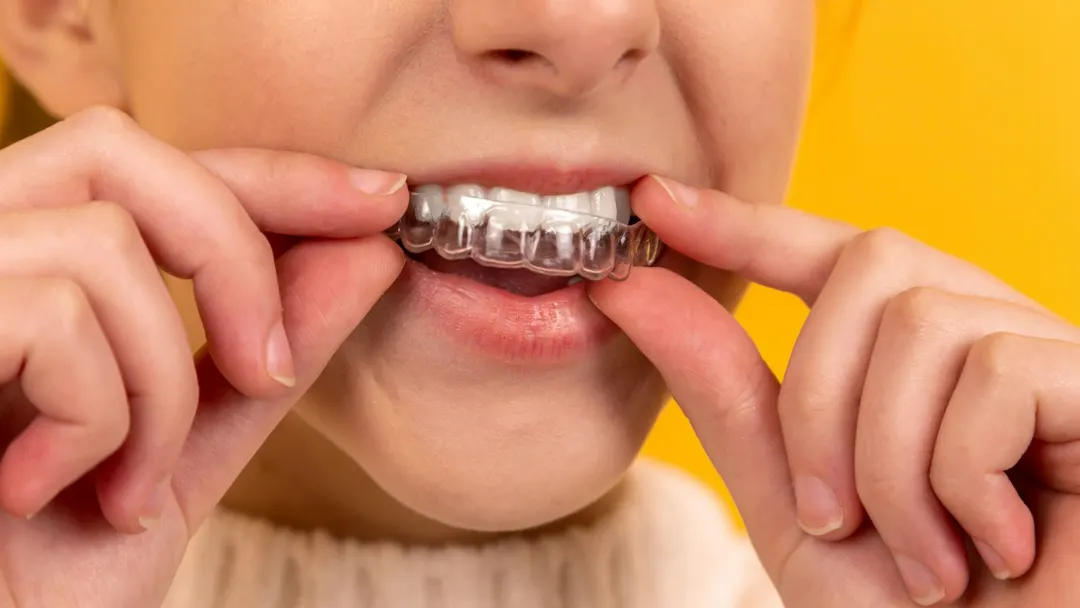
For many adults with mild to moderate obstructive sleep apnea (OSA) — or anyone who simply cannot get along with a CPAP machine — the answer is yes: a dentist can provide oral appliance therapy, a custom device worn during sleep that helps keep the airway open. It isn't a fit for every case, and it always starts with a diagnosis from a sleep physician, but for the right patient it can ease snoring, reduce breathing interruptions, and make sleep feel restorative again.
If you snore loudly, wake up gasping, or have been told CPAP just isn't working for you, this guide explains how dental sleep medicine fits into treatment, what the process looks like at American Dental Group, and how to know whether you're a candidate.
What Is Obstructive Sleep Apnea?
Obstructive sleep apnea happens when the soft tissue at the back of the throat relaxes and narrows or collapses during sleep, repeatedly interrupting breathing. Each pause can briefly wake the brain, even if you don't fully realize it, fragmenting sleep and lowering blood oxygen levels. Left unaddressed, OSA is linked to daytime fatigue, high blood pressure, and other health concerns your physician will evaluate.
It's also more common than most people assume. A 2025 systematic review published in Respiratory Medicine estimated that roughly a third of U.S. adults over 20 may have some degree of OSA, and much of it goes undiagnosed. We see this reflected in our own West Covina and San Gabriel Valley patients — many come in for a routine cleaning and mention a partner's complaints about snoring, not realizing it may be a medical issue worth discussing with a physician.
What Is Oral Appliance Therapy?
An oral appliance looks similar to an athletic mouthguard or orthodontic retainer. It fits over your upper and lower teeth and gently holds the lower jaw in a slightly forward position throughout the night. That forward posture helps keep the tongue and surrounding soft tissue from falling back into the airway, which in many patients reduces snoring and the breathing pauses associated with OSA.
This isn't a fringe idea. The American Academy of Sleep Medicine and American Academy of Dental Sleep Medicine jointly published a clinical practice guideline on oral appliance therapy recommending it for adults with OSA who cannot tolerate CPAP or who prefer an alternative, provided it's a custom, titratable appliance fitted and managed by a qualified dentist.
Are You a Candidate for Oral Appliance Therapy?
CPAP remains the first-line treatment for OSA, and your sleep physician will advise on severity and the most appropriate option for you. That said, oral appliance therapy is often considered for patients who:
- Have been diagnosed with mild to moderate OSA
- Cannot tolerate wearing a CPAP mask, or find it disruptive to travel and daily life
- Want to treat primary snoring after a physician has ruled out OSA as the cause
- Have tried CPAP and had trouble staying consistent with it night after night
Because an oral appliance works differently than CPAP, it generally reduces breathing disturbances less than CPAP does in head-to-head comparisons. For some patients, though, a device that's easier to wear every single night can outperform a more effective machine that sits in a drawer. Your sleep physician and dentist will work together to advise which approach, or combination, fits your diagnosis.
Common Signs of Sleep Apnea
If any of the following sound familiar, it's worth bringing up with your physician or at your next dental visit:
- Loud, chronic snoring, especially if a partner notices pauses in your breathing
- Waking up gasping or choking
- Morning headaches or a dry mouth on waking
- Persistent daytime fatigue despite a full night in bed
- Waking up with a sore jaw, worn tooth enamel, or signs of nighttime clenching and grinding
That last sign matters more than people expect. Clenching and grinding often show up alongside sleep-disordered breathing, and they can also point to TMJ dysfunction. If you already use, or think you might need, a protective device at night, our guide on signs of teeth grinding and night guards is a useful next read.
What Treatment Looks Like at American Dental Group
1. Screening and conversation
We start with a conversation about your symptoms, sleep history, and any CPAP experience, along with a clinical exam of your airway, bite, and jaw.
2. Diagnosis from a sleep physician
If you don't already have a diagnosis, we help coordinate a referral for a sleep study, whether in-lab or at home. Oral appliance therapy begins only after OSA, and its severity, have been confirmed by a physician.
3. Custom appliance fabrication
Once oral appliance therapy is appropriate, we take digital impressions to design a device sized and shaped specifically for your bite — not a one-size-fits-all mouthguard.
4. Fitting and titration
At your fitting, Dr. Hanasab adjusts the appliance's jaw position gradually, a process called titration, to find the setting that controls symptoms while staying comfortable enough to wear nightly.
5. Ongoing follow-up
Sleep guidelines call for periodic follow-up with both your dentist and sleep physician, not a one-and-done fitting. We check appliance fit and your bite over time, and your physician may repeat testing to confirm the device is controlling your OSA.
Oral Appliance Therapy vs. CPAP
Neither option is universally "better" — they suit different patients and different severities of OSA:
- Effectiveness: CPAP typically reduces breathing disturbances, arousals, and oxygen drops more than an oral appliance, and remains standard for moderate to severe OSA.
- Comfort and adherence: Many patients find a small oral appliance easier to wear consistently than a mask and hose, which matters because a treatment only works on nights you actually use it.
- Portability: An oral appliance travels easily and needs no power source or machine.
- Who decides: Your sleep physician, often in partnership with your dentist, determines which approach — or combination — fits your diagnosis, anatomy, and preferences.
Already on CPAP but Struggling?
Don't stop CPAP on your own if it's been prescribed. Bring your concerns to your sleep physician first; oral appliance therapy is often introduced as an alternative or adjunct once OSA severity and treatment history are reviewed together.
Why West Covina Patients Trust Us With Sleep-Related Care
Sleep apnea, TMJ disorders, and nighttime teeth grinding often overlap, which is part of why we treat them as connected issues rather than separate problems. Dr. Homan Hanasab, DDS, MS, CAGS, is a board-certified periodontist and dental implant specialist who also serves as the official LA Clippers Team Dentist, and our team works alongside area sleep physicians to coordinate diagnosis and care for patients throughout West Covina, Covina, Baldwin Park, El Monte, La Puente, Hacienda Heights, Rowland Heights, and Walnut.
If snoring, daytime exhaustion, or a sleep study report has you wondering whether an oral appliance could help, the first step is simply a conversation. We'll review your history, help coordinate a diagnosis if you need one, and explain honestly whether oral appliance therapy fits your situation — or whether CPAP, a referral, or another path makes more sense.
Request a sleep apnea consultation with American Dental Group or call (626) 337-7271 to talk through your symptoms and next steps.
Frequently Asked Questions
Can a dentist really treat sleep apnea?
A dentist can provide oral appliance therapy, a treatment recognized by the American Academy of Sleep Medicine and American Academy of Dental Sleep Medicine for adults with mild to moderate obstructive sleep apnea, or for patients who cannot tolerate CPAP. Diagnosis still starts with a sleep physician and a sleep study. Once OSA is confirmed, a qualified dentist fits and manages the custom appliance, often alongside your sleep physician's ongoing care.
How does an oral appliance treat sleep apnea?
A custom oral appliance fits over your upper and lower teeth, similar to a retainer or mouthguard, and gently holds your lower jaw in a slightly forward position during sleep. That forward position helps keep soft tissue at the back of the throat from collapsing and narrowing the airway, which can reduce the breathing pauses and snoring associated with obstructive sleep apnea.
Is oral appliance therapy as effective as CPAP?
CPAP generally reduces breathing disturbances more than an oral appliance does, and it remains the first-line treatment, especially for moderate to severe OSA. However, many patients find an oral appliance easier to tolerate night after night, and higher nightly adherence can sometimes narrow the real-world gap. Your sleep physician and dentist will advise which option, or combination, fits your diagnosis and lifestyle.
Do I need a sleep study before getting an oral appliance?
Yes. Sleep apnea is a medical diagnosis, so a sleep physician needs to confirm it, along with its severity, through an in-lab or home sleep study before oral appliance therapy begins. We're glad to help coordinate that referral if you don't already have a sleep physician, then fit and manage the custom appliance once a diagnosis is in hand.
Will my insurance cover oral appliance therapy?
Oral appliance therapy for a diagnosed sleep disorder is typically billed to medical insurance rather than dental insurance, since it treats a medical condition. Coverage varies by plan and carrier, so our team verifies your specific benefits and provides a personalized written estimate before treatment begins.
What are common signs of sleep apnea?
Common signs include loud, chronic snoring, witnessed pauses in breathing during sleep, gasping or choking awake at night, morning headaches, dry mouth on waking, and persistent daytime fatigue despite a full night in bed. Many patients also grind or clench their teeth at night, which can show up as worn enamel or jaw soreness. If this sounds familiar, it's worth bringing up at your next visit.