
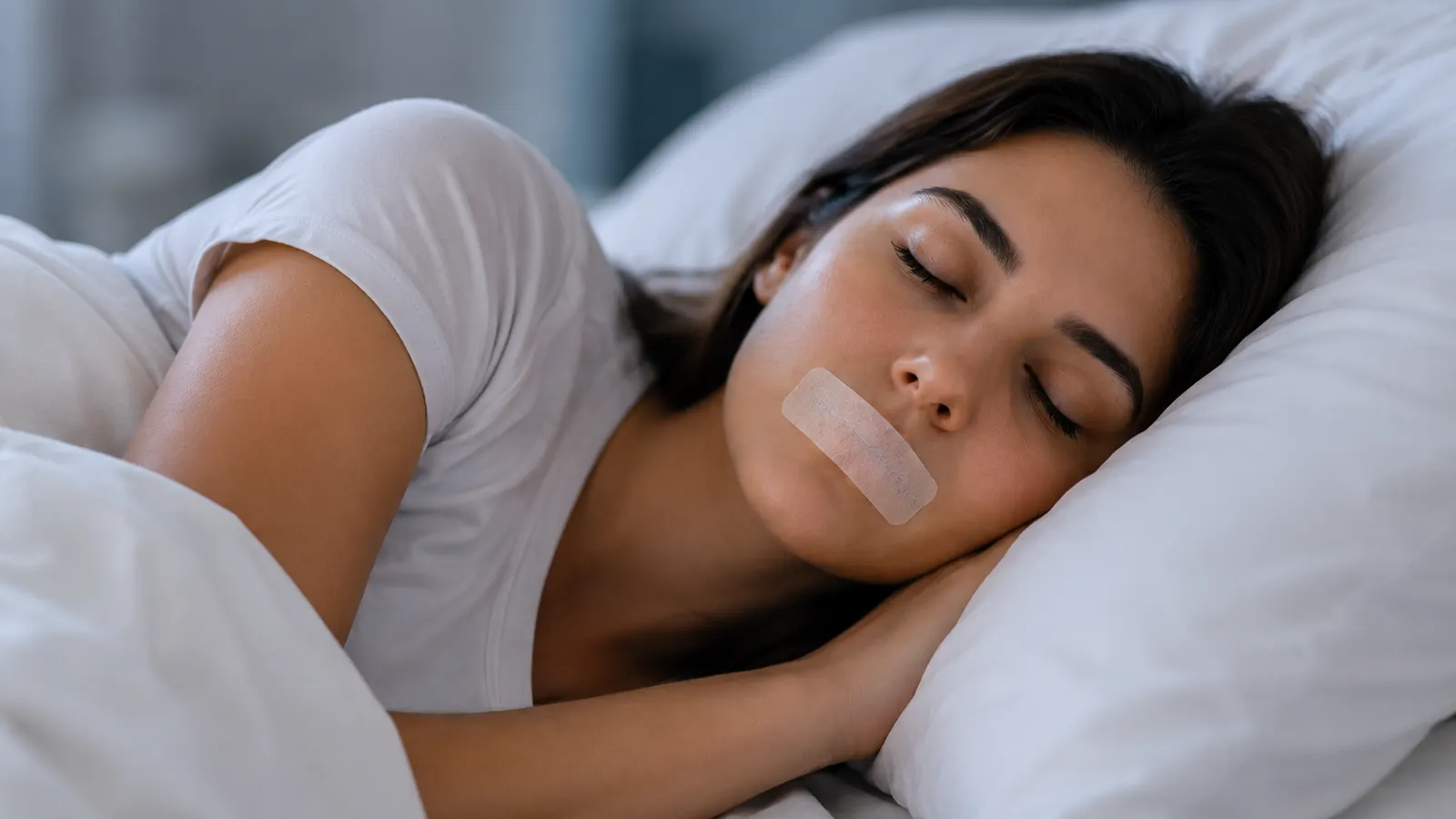
Mouth taping has not been shown to improve oral health, and taping your lips shut at night does not fix the real reason you are breathing through your mouth. The trend has exploded on TikTok and Instagram with promises of deeper sleep, less snoring, whiter teeth, and fresher breath. But the American Dental Association and a growing body of research point in a more cautious direction: the evidence is thin, and the trend can mask a problem that deserves a real diagnosis.
At American Dental Group in West Covina, patients ask about this almost every week now. The short version: the instinct behind mouth taping is not crazy. Mouth breathing really can be hard on your teeth. The solution is just aimed at the wrong target.
What Is Mouth Taping, Exactly?
Mouth taping is the practice of placing a strip of tape (or a specially shaped patch) over the lips before sleep to force breathing through the nose instead of the mouth. The pitch on social media is that nose breathing leads to better sleep, quieter nights, less morning dry mouth, and even healthier gums.
Here is the part that gets lost in the 30-second videos: a 2024 scoping review published in an evidence review of nocturnal mouth taping found that most of the popular claims are not supported by quality data, while the potential risks are rarely mentioned online. In other words, the benefits are oversold and the downsides are barely discussed.
Why People Try It: Mouth Breathing Really Is a Problem
The reason the trend resonates is that mouth breathing genuinely does affect your mouth. When you breathe through your mouth all night, your mouth dries out, and saliva is one of your most important natural defenses.
Saliva rinses away food, neutralizes acids, and helps protect your enamel. When the mouth stays dry for hours, that protection drops. According to the National Institute of Dental and Craniofacial Research, a dry mouth raises the risk of tooth decay and other oral problems. Cleveland Clinic links chronic dry mouth (xerostomia) to more cavities, gum irritation, and bad breath.
So when someone wakes up with a parched mouth, a dry throat, and stale morning breath, the desire to "just keep my mouth closed" makes sense. The problem is that tape treats the symptom, not the cause.
Quick takeaway
Mouth breathing is the issue worth taking seriously. Mouth taping is a workaround that does not address why your mouth is open in the first place, which is what actually needs fixing.
What Mouth Taping Does Not Do
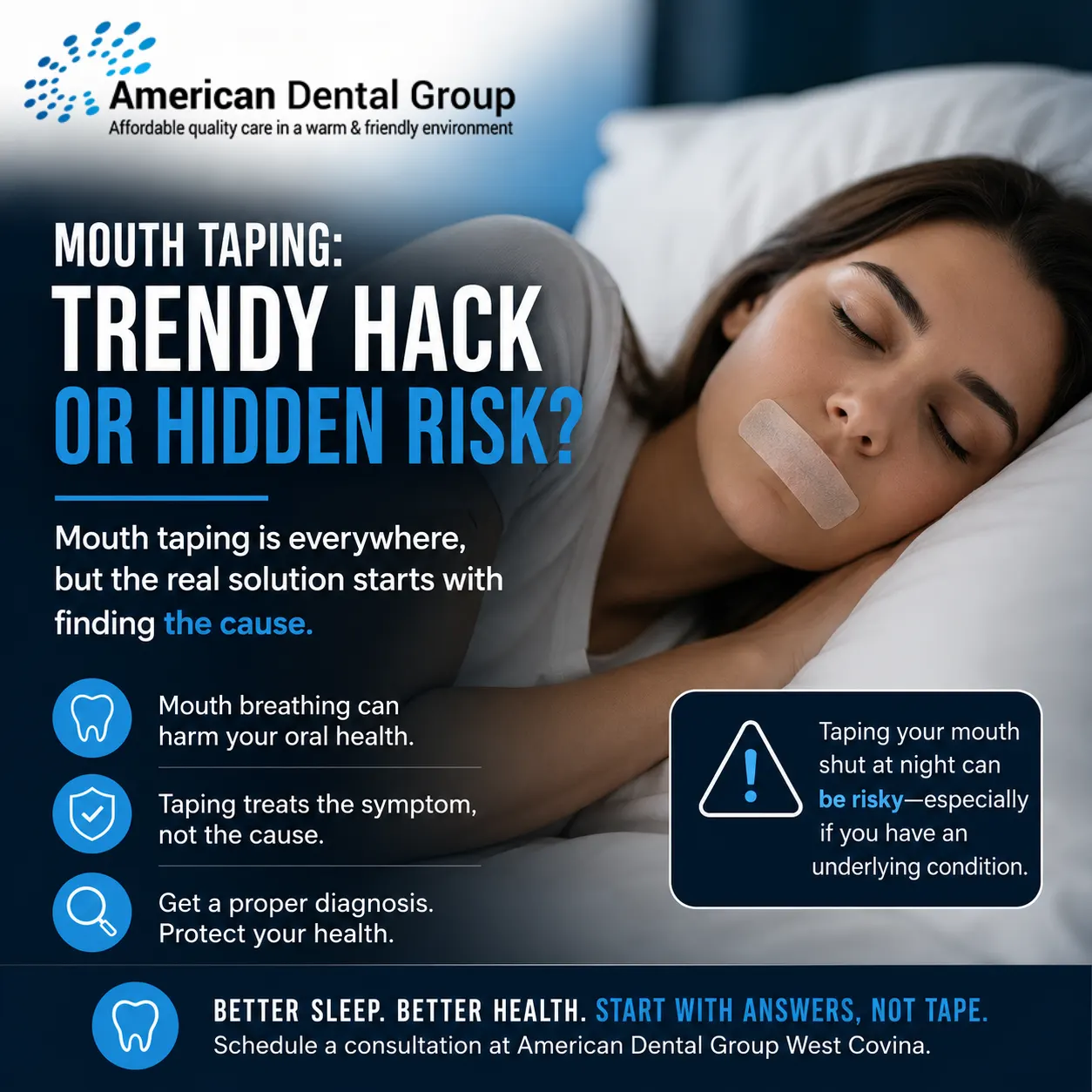
Let's separate the claims from what we can actually back up.
It does not cure snoring or sleep apnea
This is the most important point. Snoring and sleep apnea are often caused by the airway narrowing or collapsing during sleep, not by the lips being open. The ADA notes that people breathe through their mouths for reasons like nasal obstruction, a deviated septum, or enlarged tonsils, which require an ENT or a sleep evaluation rather than a strip of tape. Using mouth taping to "treat" suspected sleep apnea can be genuinely risky, because it may delay a real diagnosis of a serious condition.
It does not reliably fix dry mouth or bad breath
If your nose is blocked from allergies or congestion, taping your lips can simply leave you struggling to breathe, not breathing comfortably through your nose. The dryness and odor that mouth breathing causes are best solved by clearing up the reason you can't breathe through your nose in the first place.
It does not whiten teeth or "fix" your gums
There is no credible evidence that mouth taping whitens teeth or reverses gum problems. If your gums are inflamed or your teeth look dull, those are reasons for a professional cleaning and exam, not a roll of tape.
The Risks People Don't Talk About
Because mouth taping is marketed as a wellness hack, the downsides rarely make it into the videos. A few worth knowing:
- Restricted breathing. If your nose is congested, covering your mouth can leave you short of air during sleep, which is the opposite of restful.
- A false sense of security. Someone with undiagnosed sleep apnea may feel "handled" and skip the evaluation they actually need.
- Skin and lip irritation. Adhesives on delicate lip and facial skin can cause irritation, especially night after night.
- It's not for kids. Children often mouth breathe because of enlarged tonsils, adenoids, or allergies. Taping a child's mouth is unsafe and skips the pediatric or ENT care they need.
The Smarter Approach: Treat the Cause, Not the Symptom
If you wake up with a dry mouth, sore throat, or morning breath that won't quit, that is useful information. It usually means you are breathing through your mouth at night, and it is worth finding out why. Common, fixable causes include:
| Possible Cause | Who Can Help |
|---|---|
| Allergies or chronic congestion | Your physician or an allergist can address the stuffiness so you can breathe through your nose naturally. |
| Deviated septum or enlarged tonsils | An ear, nose, and throat specialist can evaluate structural blockages. |
| Snoring or suspected sleep apnea | A physician or sleep specialist can order a sleep evaluation, which is the proper path the ADA recommends. |
| Dry mouth, irritated gums, early decay | Your dentist can catch the oral effects early and help protect your teeth while the cause is addressed. |
This is where a dental visit is genuinely useful. We often spot the signs of nighttime mouth breathing during a routine exam, such as dry tissues, irritated gums behind the upper front teeth, and certain wear patterns. If we see them, we can talk through what might be going on and when to loop in your physician. If grinding is part of your nighttime picture too, our guide on signs of teeth grinding is a helpful companion read.
How to Protect Your Teeth From Mouth Breathing Right Now
While you sort out the underlying cause, a few simple habits help protect your teeth:
- Keep up with brushing and flossing. A dry mouth needs that mechanical cleaning even more, since saliva isn't doing as much of the work.
- Stay hydrated during the day. Sipping water supports healthy saliva flow.
- Ask about dry-mouth products. Certain rinses and lozenges are designed to keep tissues moist; your dentist can point you to options that are safe to use regularly.
- Don't ignore allergies or congestion. Treating the stuffy nose is often the real fix.
- Keep your routine cleanings. Regular exams and cleanings are the best way to catch the early effects of a dry mouth before they grow.
Mouth Breathing and Dry Mouth Care in West Covina
Mouth taping is a great example of a trend that gets the question right and the answer wrong. The question, "is my nighttime breathing hurting my teeth?", is worth asking. The answer is not a strip of tape; it's figuring out why your mouth is open at night and protecting your teeth in the meantime.
At American Dental Group, we help patients across West Covina, Covina, Baldwin Park, El Monte, Rowland Heights, La Puente, and nearby communities understand what their morning dry mouth is telling them and how to keep their teeth and gums healthy. If you wake up parched, deal with persistent bad breath, or just want a checkup, schedule a visit through our online appointment form or call (626) 337-7271.
This article is for general education and is not a substitute for evaluation by a dentist or physician. If you have ongoing snoring, gasping during sleep, or daytime exhaustion, talk with your doctor about a sleep evaluation.
Frequently Asked Questions
Is mouth taping safe for your teeth?
Mouth taping has not been shown to improve oral health, and dentists are cautious about it. Taping your lips shut at night does not fix why you are breathing through your mouth. If the underlying cause is a blocked nose, allergies, or a sleep breathing problem, taping can mask it and delay the right diagnosis.
Can mouth breathing actually damage my teeth and gums?
Yes. Chronic mouth breathing dries out the mouth, and saliva is one of your main natural defenses against cavities and gum disease. A persistently dry mouth is linked to more decay, irritated gums, and bad breath, which is exactly what mouth taping claims to fix but does not reliably solve.
Does mouth taping help with snoring or sleep apnea?
There is not strong evidence that mouth taping treats snoring or sleep apnea, and using it for sleep apnea can be risky. Sleep apnea is a medical condition that needs a proper evaluation. Taping the mouth shut does not address blocked airways and may give a false sense of security.
Why do I wake up with a dry mouth or sore throat?
Waking up with a dry mouth, sore throat, or bad morning breath is a common sign of breathing through your mouth at night. Common causes include nasal congestion, allergies, a deviated septum, enlarged tonsils, or a sleep breathing disorder. A dentist can spot the oral signs and help point you toward the right care.
What should I do instead of mouth taping?
Start by finding out why you breathe through your mouth. Treating nasal congestion or allergies, seeing an ENT for blockages, or getting evaluated for a sleep breathing disorder addresses the real cause. A dental exam can also catch the early oral effects of dry mouth before they become bigger problems.
Is mouth taping safe for children or teens?
Mouth taping is not recommended for children. Kids often breathe through their mouths because of enlarged tonsils or adenoids, allergies, or other issues that need a pediatrician or ENT. Taping a child's mouth at night can be unsafe and does not treat the underlying cause.
Can a dentist tell if I breathe through my mouth at night?
Often, yes. Dentists frequently notice the signs of mouth breathing during routine exams, such as dry tissues, irritated gums along the front teeth, and certain wear patterns. If we see those signs, we can talk through what might be causing it and when to involve your physician.