
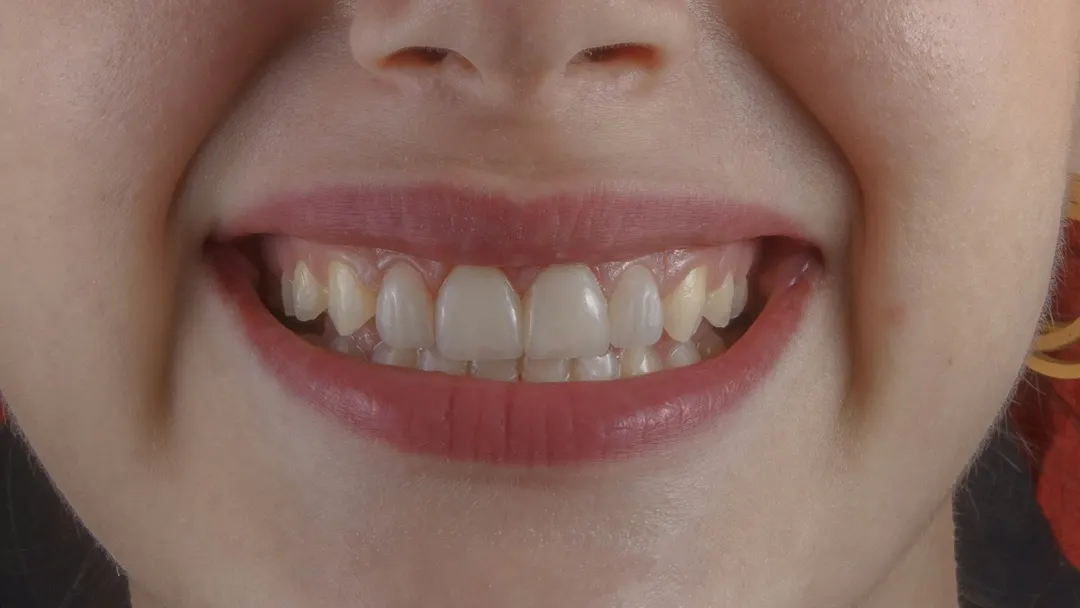
Photo by Ozkan Guner on Unsplash
Gum disease rarely announces itself with pain. It usually starts as bleeding when you brush or floss, gums that look red or puffy along the edge, and breath that doesn't improve no matter how well you brush. Caught at that early stage, it can often be turned around with a professional cleaning and a few changes at home. Once it progresses into periodontitis, the infection starts breaking down the bone that anchors your teeth — and treatment shifts from reversing the damage to controlling it before teeth loosen.
That gap between "easy to fix" and "managing it for life" is why the early signs matter so much. Here's how to recognize gum disease, understand which stage you're likely in, and know what treatment actually involves at our West Covina practice.
Why Gum Disease Is So Easy to Miss
Most dental problems get your attention by hurting. Gum disease usually doesn't — not until it's well established. The bacteria in plaque irritate the gum tissue, the body responds with inflammation, and the tissue slowly detaches from the tooth. None of that necessarily registers as pain, which is why so many people are surprised when a dentist tells them they have it.
It's also far more common than most patients expect. According to the Centers for Disease Control and Prevention, about 4 in 10 U.S. adults aged 30 or older had some level of periodontitis in 2009–2014, and the rate climbs with age. If you've been told your gums bleed "a little," you are in very ordinary company — which is exactly the reason not to shrug it off.
Early Warning Signs Worth Acting On
Healthy gums are firm, pale pink at the margin, and don't bleed during normal brushing or flossing. Any of the following are worth a mention at your next visit:
- Bleeding when you brush or floss — the most common early sign, and the one most often dismissed as brushing too hard.
- Red, swollen, or shiny gums instead of firm pink tissue.
- Persistent bad breath or a bad taste that returns quickly after brushing.
- Tenderness along the gumline, especially between teeth.
- Gums that look like they're pulling back, making teeth appear longer or exposing the darker root surface.
- New sensitivity to cold at the gumline where root surface has become exposed.
Signs that suggest things have progressed further include teeth that feel loose or seem to have shifted, a change in how your teeth fit together when you bite, gums that pull away enough to trap food, or pus around the gumline. Those warrant an evaluation soon rather than at your next routine cleaning.
The Pink-in-the-Sink Test
If you consistently see pink in the sink after brushing, that's inflammation talking — not a technique problem. Bleeding gums are a symptom, in the same way a bleeding cut on your hand would be. It's the single most useful early signal you can act on.
Gingivitis vs. Periodontitis: Where the Line Falls
People use "gum disease" for both stages, but the distinction changes everything about what treatment can accomplish.
Gingivitis
Inflammation is limited to the gum tissue itself. The bone and the fibers attaching your gums to the teeth are still intact. Because nothing structural has been lost yet, gingivitis often resolves with a thorough professional cleaning and consistent home care over the following weeks. This is the stage you want to catch.
Periodontitis
The inflammation has moved below the gumline and begun destroying the attachment and the supporting bone. As the tissue detaches, deeper spaces called periodontal pockets form between the gum and the tooth — and those pockets are too deep to clean with a toothbrush, so bacteria accumulate undisturbed. Bone that has been lost doesn't regrow on its own. Treatment aims to halt the process and stabilize what's still there, and in select cases regenerative procedures may rebuild a portion of the lost support.
| Stage | What's Happening | Typical Approach |
|---|---|---|
| Gingivitis | Gum inflammation only; no bone loss | Professional cleaning and home care coaching |
| Early periodontitis | Pockets forming, early bone loss | Scaling and root planing, then re-evaluation |
| Moderate periodontitis | Deeper pockets, more bone loss, recession | Deep cleaning plus adjunctive or surgical therapy |
| Advanced periodontitis | Significant bone loss; teeth may loosen | Surgical, regenerative, or replacement planning |
What Raises Your Risk
Plaque is the trigger, but how strongly your body reacts to it varies from person to person. Common factors that raise risk include:
- Smoking or vaping — one of the strongest risk factors, and it can mask bleeding, hiding the disease while it advances.
- Diabetes, particularly when blood sugar is not well controlled. The relationship runs both ways: gum inflammation can make glucose harder to manage.
- Genetics and family history — some people are simply more prone to an aggressive inflammatory response.
- Hormonal changes during pregnancy or menopause, which can make gums more reactive.
- Dry mouth, often a side effect of medications, since saliva helps keep bacteria in check.
- Grinding and clenching, which add mechanical stress to teeth already losing support. If you wake with a sore jaw or your partner hears grinding at night, our guide to the signs of teeth grinding and whether you need a night guard is a good starting point.
- Crowded or crooked teeth, which create spots that are genuinely hard to clean well.
How Gum Disease Is Diagnosed
A gum evaluation is more specific than a visual glance. During a periodontal exam we measure the depth of the space between each tooth and the surrounding gum with a small calibrated probe, recording several points around every tooth. Shallow readings that don't bleed suggest healthy tissue; deeper pockets, especially ones that bleed on probing, point to active disease.
We also check how much gum recession is present, whether any teeth have mobility, and take X-rays to see the level of the supporting bone — something that can't be assessed by looking at the gums alone. Those measurements together determine the stage, which is what shapes the treatment plan. They also give us a baseline to compare against at your follow-up so we can see, objectively, whether the tissue responded.
Treatment Options, From Least to Most Involved
Periodontal care is a ladder. Most patients start on the lower rungs, and many never need to go further.
Professional cleaning and home care coaching
For gingivitis, removing the plaque and tartar the toothbrush can't reach, combined with targeted coaching on technique, is frequently enough for the tissue to settle down over the following weeks. Sanaz Hanasab, RDH, our founder and hygiene educator, works with patients on the specific spots their routine is missing — which is usually more useful than being told to "floss more."
Scaling and root planing
Often called a deep cleaning, this is the standard first-line treatment once pockets have formed. Scaling removes plaque and hardened tartar from below the gumline; root planing smooths the root surfaces so the gum tissue can reattach more readily and bacteria have less to cling to. It's done with local anesthetic, and it's frequently completed across one or two visits.
Adjunctive therapies
Depending on the case, your dentist may add locally delivered antimicrobials into specific deep pockets, or recommend a prescription rinse, alongside the deep cleaning. These are supplements to mechanical cleaning, not substitutes for it.
Surgical and regenerative procedures
When pockets stay deep after non-surgical therapy, pocket reduction surgery allows the gum tissue to be folded back so the root surfaces can be cleaned thoroughly and the tissue repositioned to fit more snugly. Where bone loss has a favorable shape, bone grafting or guided tissue regeneration may be used to rebuild some of the lost support. Whether these apply to you depends on the specific anatomy of the defect, which is something your periodontist will assess directly.
Gum grafting for recession
If gums have receded and left root surfaces exposed — causing sensitivity, or simply looking longer than you'd like — a soft tissue graft can cover the exposed area and add thickness to fragile tissue.
Periodontal maintenance
After active treatment, most patients move to cleanings on a more frequent schedule than the standard twice-yearly visit, because the pockets that remain need disturbing more often than healthy tissue does. This is the part that keeps results holding. Gum disease is managed over time rather than closed out in a single appointment.
Why a Periodontist Matters Here
A periodontist completes years of specialty training focused specifically on the gums and the bone that supports your teeth. At American Dental Group, Dr. Homan Hanasab is a board-certified periodontist and dental implant specialist with more than 25 years of experience, and the official LA Clippers Team Dentist — so patients across West Covina, Covina, Baldwin Park, and the wider San Gabriel Valley can be evaluated and treated in one place rather than being referred out.
Gum Health and Tooth Replacement
There's a practical reason gum disease and dental implants come up in the same conversation. Implants rely on healthy bone to integrate and healthy gum tissue to stay stable, and untreated periodontal disease undermines both. When a tooth has already been lost to gum disease, getting the surrounding tissue under control is generally a prerequisite before replacement is planned — not an afterthought. If you're weighing options, our complete guide to dental implants covers how they compare with other approaches, and you can read more about the treatment itself on our dental implants page.
What You Can Do Between Visits
Professional treatment removes what's already accumulated. What happens at home determines whether it comes back:
- Brush twice daily for two minutes with a soft-bristled brush, angled toward the gumline rather than scrubbed straight across.
- Clean between the teeth once a day — floss, interdental brushes, or a water flosser, whichever you'll actually use consistently.
- Don't stop cleaning an area because it bleeds. Inflamed tissue often bleeds at first and settles as it becomes healthier.
- If you smoke or vape, quitting is among the most meaningful things you can do for your gums.
- Keep chronic conditions like diabetes managed, and let us know about medication changes that leave your mouth dry.
- Keep your maintenance schedule even when nothing hurts — the absence of symptoms is not evidence the disease is inactive.
Don't Wait for It to Hurt
The reason we push people to come in at the bleeding-gums stage is simple: that's when treatment is at its most straightforward and the tissue has the best chance to recover fully. Waiting until teeth feel loose narrows the options considerably. If you've noticed any of the signs above — or it's simply been a while since anyone measured your gums — a periodontal evaluation is a short appointment that tells you exactly where you stand.
Request a periodontal evaluation with American Dental Group or call us at (626) 337-7271. We'll measure, explain what we find in plain language, and give you a personalized written estimate for any treatment recommended.
Frequently Asked Questions
What are the earliest signs of gum disease?
The earliest signs are usually subtle: gums that bleed when you brush or floss, redness or puffiness along the gumline, tenderness, and breath that stays bad even after brushing. Healthy gums don't bleed during normal cleaning, so bleeding is worth mentioning to your dentist rather than waiting to see whether it settles down on its own.
Can gum disease be reversed?
Gingivitis, the earliest stage, can often be resolved with a professional cleaning and consistent home care, because the bone and attachment around the teeth haven't yet been damaged. Once gum disease progresses to periodontitis and bone is lost, that lost support doesn't grow back on its own. Treatment at that point focuses on controlling the infection and stabilizing what remains, and in some cases regenerative procedures may help rebuild a portion of the lost tissue.
Is gum disease treatment painful?
Most periodontal treatment is done with local anesthetic, so patients typically feel pressure and movement rather than pain during the appointment. Gums may be tender and teeth may feel temporarily sensitive to cold for several days afterward. Your dentist will review what to expect and what you can take for comfort based on your health history.
How long does gum disease treatment take?
A deep cleaning is often completed in one or two visits, sometimes treating one half of the mouth at a time. A follow-up evaluation usually takes place several weeks later to remeasure the gum pockets and see how the tissue responded. After that, most patients move to a periodontal maintenance schedule with cleanings more often than the standard twice a year, because gum disease is managed over time rather than finished in a single appointment.
Do I need to see a periodontist for gum disease?
Mild gingivitis is often handled well by a general dentist and hygienist. A periodontist is a specialist with additional training in the gums and supporting bone, and is generally involved when there are deeper pockets, bone loss, gum recession, loose teeth, or a case that hasn't responded to previous treatment. At American Dental Group in West Covina, Dr. Homan Hanasab is a board-certified periodontist, so patients can be evaluated and treated without a referral elsewhere.
Is gum disease linked to other health conditions?
Research has repeatedly found associations between periodontal disease and conditions such as diabetes, cardiovascular disease, and adverse pregnancy outcomes. These are associations rather than proof that gum disease directly causes those conditions, and the relationship with diabetes appears to run in both directions. Telling your dentist about your medical conditions and medications helps shape a treatment plan that fits your overall health.