
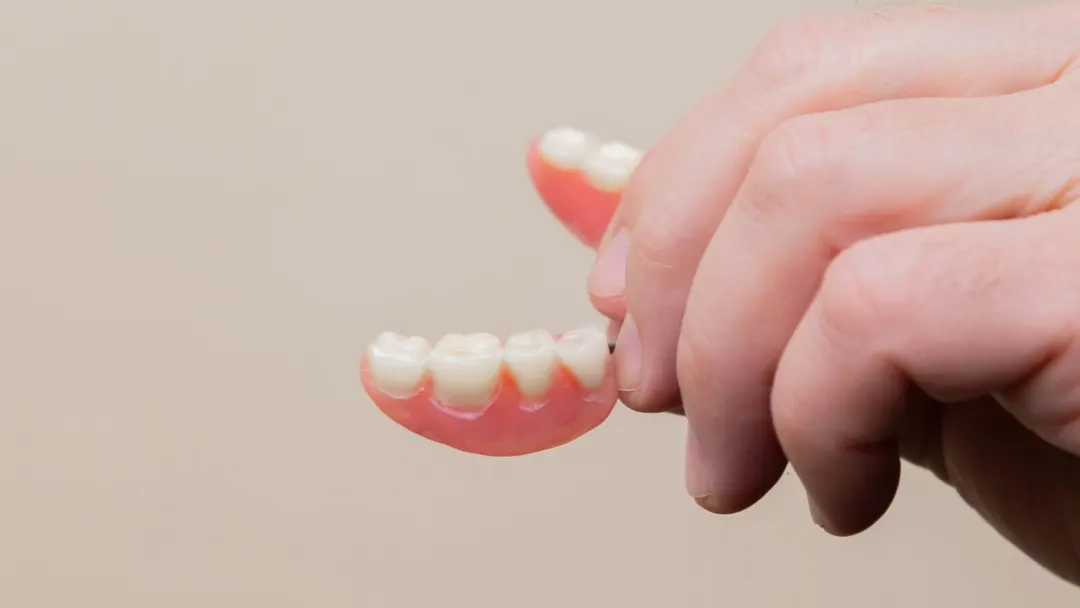
Photo by Diana Polekhina on Unsplash
Dental implants and dentures both replace missing teeth, but they work in fundamentally different ways. Implants are titanium posts anchored in the jawbone that support a fixed crown, bridge, or denture, while conventional dentures are removable appliances that rest on the gums. The better fit for you depends on how many teeth you're missing, the health of your jawbone, your budget, and how much you value a fixed solution over a removable one.
If you're weighing the two, this guide breaks down how they compare on stability, appearance, bone health, upkeep, and long-term outlook — so you can walk into your consultation already knowing the right questions to ask.
The Core Difference: Fixed vs. Removable
A dental implant replaces the entire tooth structure, root and all. A small titanium post is placed in the jawbone, where it's designed to integrate with the surrounding bone over several months. Once healed, it supports a crown, bridge, or full denture that stays fixed in place — you don't take it out at night.
A conventional denture, by contrast, is custom-made to sit on the gums (a full denture) or clip onto remaining teeth (a partial denture). It's removable for cleaning and while sleeping, relies on suction, adhesive, or clasps to stay put, and doesn't require surgery to place. For patients who are missing most or all of their teeth and want to explore both directions, our complete guide to dental implants covers the surgical side in more depth.
How They Compare, Side by Side
| Factor | Dental Implants | Dentures |
|---|---|---|
| Stability | Fixed in the jaw; doesn't shift while eating or speaking | Removable; may loosen or shift, especially over time |
| Bone health | Stimulates the jawbone, similar to a natural root | Rests on the gums; underlying bone can remodel over time |
| Procedure | Minor surgery, often with a healing period | Non-surgical; fitted and adjusted over a few visits |
| Daily care | Brush and floss like natural teeth | Remove nightly for soaking and cleaning |
| Longevity | Can last decades with good care | Typically need relining or replacement every several years |
| Upfront investment | Generally higher upfront, personalized at consultation | Generally lower upfront, personalized at consultation |
We no longer quote specific dollar figures in general content like this, since every treatment plan depends on your individual anatomy, insurance, and the number of teeth involved — we provide a personalized written estimate at your consultation once we know exactly what you need.
What Happens to Your Jawbone Over Time
One of the most overlooked differences between implants and dentures is what happens beneath the surface. When a tooth root is missing, the jawbone in that area no longer receives the everyday chewing stimulation it needs, and it can begin to remodel and change shape — a process that's been studied in prosthodontic literature for decades (Klemetti, Journal of Prosthetic Dentistry).
A dental implant's titanium post transmits chewing forces into the bone much like a natural root, which can help maintain bone at that site for as long as the implant stays integrated. A conventional denture sits on top of the gum tissue rather than inside the bone, so it doesn't provide that same stimulation. Over years, this can change how a denture fits, which is why relines and adjustments become part of long-term denture care.
A Middle-Ground Option
Implant-supported (snap-in) dentures use a small number of strategically placed implants to anchor a removable denture. Patients get more stability and some bone-preserving benefit without the cost and time of replacing every tooth individually — a good option to discuss if you're missing most or all of your teeth.
Comfort and Daily Living
Many patients who switch from dentures to implants describe an adjustment period of relearning what it feels like to chew and speak without a removable appliance. Implants don't require adhesive, don't need to be taken out, and don't cover the roof of the mouth the way an upper denture often does, which some patients find affects taste and speech.
Dentures, on the other hand, are removable by design — which some patients actually prefer for ease of cleaning, especially if a fixed procedure isn't the right fit medically or financially. Comfort is genuinely personal here, and your dentist will advise on what tends to work best for your specific mouth and lifestyle.
Who Tends to Be a Good Candidate for Each
Dental implants may be a good fit if you:
- Have adequate jawbone density, or are a candidate for bone grafting to build it up.
- Want a fixed solution that functions like a natural tooth.
- Are in good general health to support a minor surgical procedure and healing period.
- Are missing one tooth, several teeth, or a full arch and want the most natural-feeling replacement.
Dentures may be a good fit if you:
- Prefer a non-surgical option or have health considerations that make surgery less appealing.
- Are missing most or all of your teeth and want a solution that can often be completed faster.
- Want a removable option for ease of cleaning.
- Are looking for a lower upfront investment, understanding that adjustments and replacements come with time.
Many patients also aren't choosing between "all implants" or "all dentures" — a combination, like a few strategic implants supporting a denture, or a fixed bridge on implants for a partial arch, often ends up being the recommended plan after an exam.
What About Cost?
It's natural to want a number, but the honest answer is that cost depends heavily on your case: how many teeth are involved, whether extractions or bone grafting are needed, the materials used, and your insurance coverage. Generally speaking, dentures tend to carry a lower upfront cost than implants, while implants tend to offer a longer functional lifespan, which can affect the total cost of ownership over many years. Our dental implant cost guide walks through the specific factors that drive implant pricing in more detail. Either way, we provide a clear, written estimate at your consultation before any treatment begins — no guessing required.
Making the Decision With Your Dentist
The best way to decide between implants and dentures is a clinical exam with imaging, so your dentist can assess your bone density, gum health, remaining teeth, and overall goals. At American Dental Group, that evaluation is led by Dr. Homan Hanasab, a board-certified periodontist and dental implant specialist who also serves as the official LA Clippers Team Dentist, alongside founder and hygiene educator Sanaz Hanasab, RDH.
Whichever direction fits you best, the goal is the same: a replacement that lets you eat, speak, and smile with confidence. If you're still missing pieces of the puzzle, our guide on what to do about a dental emergency or our overview of the dental implants service may help fill in the gaps before your visit.
Schedule a consultation with American Dental Group to find out whether implants, dentures, or a combination of the two is the right path for your smile.
Frequently Asked Questions
What's the main difference between dental implants and dentures?
A dental implant is a titanium post surgically placed in the jawbone that supports a fixed crown, bridge, or denture, functioning like a natural tooth root. A conventional denture is a removable appliance that rests on the gums or clips onto remaining teeth. Implants generally offer more stability and help preserve jawbone, while dentures are removable and typically a lower-effort initial procedure.
Are dental implants more comfortable than dentures?
Many patients find implants more comfortable day to day because they're anchored in the jaw and don't shift or rub against the gums the way a removable denture can. That said, comfort also depends on how well an appliance is fitted and maintained, and your dentist can help you weigh both options against your specific anatomy and lifestyle.
Do dentures prevent bone loss the way implants do?
Not in the same way. Implants transmit chewing forces into the jawbone similarly to a natural tooth root, which helps maintain bone at that site. Conventional dentures rest on top of the gums without that stimulation, and the underlying bone can continue to remodel and change shape over time, which is a well-documented phenomenon in prosthodontic research.
Can dentures be combined with implants?
Yes. Implant-supported (snap-in) dentures use a small number of implants to anchor a removable or semi-permanent denture, combining some of the stability benefits of implants with a design that's typically less involved than replacing every tooth with an individual implant. This is often a middle-ground option for patients missing most or all of their teeth.
How long do dental implants and dentures typically last?
With good oral hygiene and regular checkups, dental implants can last for decades and in many cases for life, though the crown on top may eventually need replacement. Conventional dentures generally need relining or replacement every several years as your jawbone and gum tissue change shape. Your dentist can give you a more specific outlook based on your oral health.
Which option is right for me — implants or dentures?
The right choice depends on how many teeth you're missing, your jawbone health, budget, medical history, and personal preferences around a fixed versus removable solution. A consultation and imaging with our team lets us walk through both paths and provide a personalized recommendation and written treatment plan.