
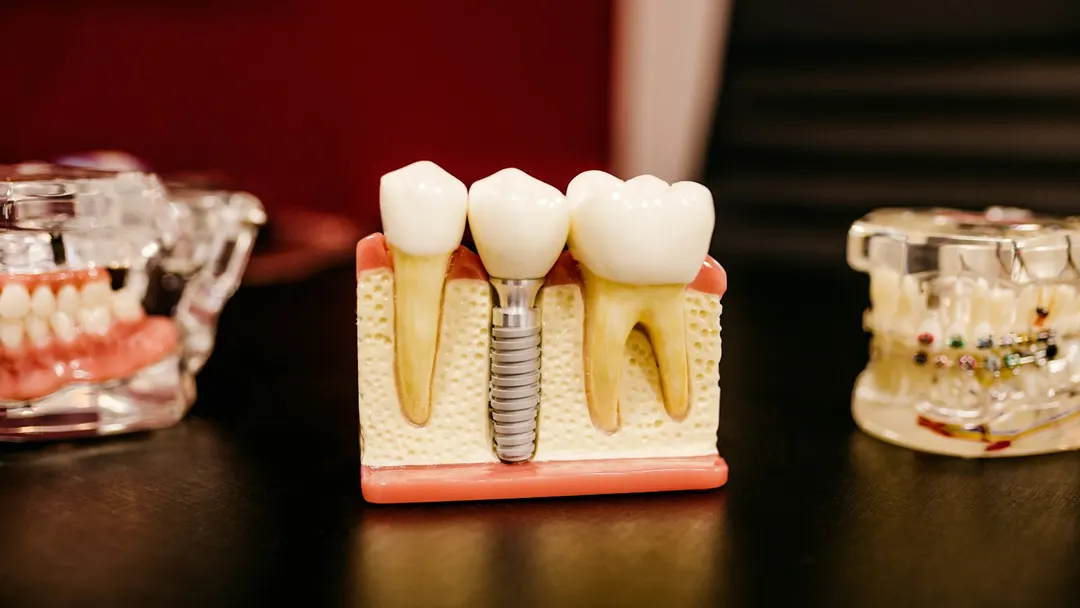
Photo by Jonathan Borba on Unsplash
A root canal removes infected or inflamed tissue from inside a tooth, then cleans, seals, and restores it so you can keep the tooth instead of losing it. Thanks to local anesthesia and modern technique, most patients feel about the same as they would during a filling — any sharp pain people associate with root canals almost always comes from the infection itself, not the treatment that resolves it. At American Dental Group in West Covina, Dr. Homan Hanasab and our team walk you through every step beforehand so nothing catches you off guard.
If you've been told you need a root canal, or you're dealing with a toothache and wondering whether that's where this is headed, this guide covers what the procedure actually involves, how long it takes, whether it hurts, and what recovery looks like. If you're currently in pain, our guide to toothache causes and relief can help you figure out what's going on until you're seen.
What Is a Root Canal, Exactly?
Inside every tooth, beneath the enamel and dentin, is a soft tissue called pulp that contains nerves and blood vessels. When that pulp becomes infected or badly inflamed — usually from deep decay, a crack, a failed filling, or repeated dental procedures on the same tooth — it can't heal on its own and will continue to cause pain or spread infection. Root canal treatment, also called endodontic therapy, removes that damaged tissue, disinfects the inside of the tooth, and seals it so the tooth can stay in your mouth doing its job.
The name sounds worse than the experience. The "canal" simply refers to the narrow channel inside the tooth's root where the pulp sits, and "root canal treatment" just means cleaning out that channel.
Signs You May Need a Root Canal
Not every toothache means a root canal, but certain symptoms are common reasons your dentist may recommend one:
- Persistent or throbbing tooth pain, especially pain that lingers after eating something hot or cold
- Sensitivity to pressure when chewing or biting down
- Swelling or tenderness in the gum near a specific tooth
- A tooth that has darkened or discolored compared to its neighbors
- A small bump on the gum that looks like a pimple, which can indicate a draining abscess
- Pain from a tooth that previously had a large filling or crown
If you're experiencing sudden or severe tooth pain right now, our guide on what to do in a dental emergency can help you figure out your next step while you wait to be seen.
How We Determine Whether You Need One
A root canal is never recommended casually. During your exam, your dentist will review your symptoms, test the tooth's response to temperature and pressure, and take a dental X-ray to see the extent of decay or infection and the shape of the roots. In some cases, a tooth that looks fine on the surface may show significant infection underneath, which is why imaging matters more than how a tooth feels day to day. Your dentist will advise you on the full picture, including whether the tooth can realistically be saved or whether extraction is the more appropriate path.
What Happens During a Root Canal, Step by Step
Knowing what to expect at each stage is often what takes the anxiety out of the appointment:
1. Numbing the area
Your dentist numbs the tooth and surrounding gum with local anesthesia, the same as for a filling. Treatment doesn't begin until the area is fully numb.
2. Isolating and accessing the tooth
A small protective sheet keeps the tooth dry and free of saliva during treatment. Your dentist then creates a small opening in the top of the tooth to reach the pulp chamber.
3. Removing the infected pulp
Using fine instruments, your dentist removes the infected or inflamed tissue from inside the tooth and its canals, then cleans and shapes the canals to prepare them for filling.
4. Disinfecting and filling the canals
The cleaned canals are disinfected and then filled with a biocompatible material to seal them permanently against bacteria, preventing reinfection.
5. Sealing and restoring the tooth
A temporary filling closes the access opening after treatment. Because a root canal-treated tooth can become more brittle over time, most back teeth need a permanent dental crown afterward to protect it from fracturing under normal biting force.
One Visit or Two?
Many root canals are completed in a single appointment. More complex cases — a tooth with unusual canal anatomy, significant infection, or a molar with multiple roots — may be split across two visits so your dentist can place medication inside the tooth to calm the infection before the final filling.
Does a Root Canal Hurt?
This is the question almost everyone asks, and it's understandable given the procedure's reputation. In practice, local anesthesia means most patients feel pressure and vibration rather than pain during the treatment itself. The discomfort people remember is usually from the infection that led them to the dentist in the first place — by the time the infected tissue is removed, many patients feel noticeably better. Some mild soreness or tenderness around the tooth and gum for a few days afterward is common and can usually be managed with over-the-counter pain relief as your dentist advises.
Root Canal vs. Extraction: Why Save the Tooth?
When a tooth is badly infected, there are really two paths forward: a root canal to save it, or extraction to remove it. In most cases, your dentist will recommend saving the natural tooth whenever it's realistic to do so, because:
- Your natural bite and chewing pattern stay intact.
- Neighboring teeth don't shift to fill the gap.
- The jawbone around the tooth root keeps more of its support.
- You avoid the added time and planning of a tooth-replacement option afterward.
That said, extraction is sometimes the better call — for example, if a tooth is fractured below the gumline or has too little bone support left. If extraction is recommended for your situation, replacement options like a dental implant can restore both function and appearance afterward. Your dentist will walk you through the tradeoffs for your specific tooth.
Recovery and Aftercare
Recovery from a root canal is generally straightforward:
- The first few days: Mild tenderness is normal. Avoid chewing on the treated tooth until it has a permanent crown or filling in place.
- Pain management: Over-the-counter pain relievers are usually enough; your dentist will let you know if anything more is needed.
- Follow-up visit: Most patients return within a few weeks to have the tooth fitted for a permanent crown, which protects it long-term.
- Ongoing care: Brushing, flossing, and regular checkups help the restored tooth last as long as possible.
Contact our office if you experience swelling, a return of severe pain, or a fever after treatment — while uncommon, your dentist will want to evaluate the tooth promptly.
Putting Off Treatment Isn't a Neutral Choice
It's tempting to wait out a toothache and hope it resolves on its own, but an infected tooth doesn't heal without treatment. Left alone, the infection can spread, leading to a larger abscess, bone loss around the tooth, and eventually the loss of the tooth itself, which narrows your options and can make treatment more involved. If you're dealing with ongoing discomfort, our page on toothache causes and relief can help you understand what you're feeling while you get an appointment on the calendar.
Request an appointment with American Dental Group today or call (626) 337-7271 if you're dealing with tooth pain — our West Covina team, including Dr. Homan Hanasab, will get you in, get you comfortable, and walk you through exactly what your tooth needs.
Frequently Asked Questions
Does a root canal hurt?
Most patients report that a root canal feels similar to getting a filling, because the area is thoroughly numbed before treatment begins. The pain people associate with root canals usually comes from the infection itself, not the procedure that treats it. Mild soreness for a few days afterward is common and typically manageable with over-the-counter pain relief.
How long does a root canal take?
A straightforward root canal on a front tooth can often be completed in one visit of roughly 60 to 90 minutes, while molars with multiple canals or more complex cases may take longer or require a second appointment. Your dentist will give you a time estimate specific to your tooth after examining it and reviewing your X-rays.
How long does a root canal-treated tooth last?
A tooth that has had a root canal and is properly restored with a crown can last for many years, and in many cases for the rest of your life, with routine care and regular checkups. Longevity depends on the tooth's structure, how soon it was restored after treatment, and ongoing oral hygiene.
What happens if I don't get a root canal when I need one?
Leaving an infected tooth untreated allows the infection to spread further into the tooth, surrounding bone, and sometimes other areas of the face or body, which can lead to an abscess, swelling, and eventually loss of the tooth. Your dentist will advise you promptly if imaging shows infection so treatment isn't delayed.
Can I drive myself home after a root canal?
Since root canals are typically done with local anesthesia rather than sedation, most patients are able to drive themselves home afterward. If you choose to add sedation for anxiety or comfort, plan to have someone drive you, and your dentist will go over those instructions in advance.
Is a root canal better than pulling the tooth?
In most cases, saving your natural tooth with a root canal is preferable to extraction, because it preserves your natural bite, avoids shifting of neighboring teeth, and maintains jawbone support. Your dentist will advise you if your specific tooth is a good candidate for a root canal or if extraction and replacement, such as with a dental implant, is the better option.